- Assumes you have existing old window screens to measure.
- Measurements are normally stated in "Width" and then "Height".
- Measure to the nearest 1/16 inch.
- Measure to the "Outside Edge" of the "Window Screen Frame".
- Measure near the corners as sometimes the middle may be bowed.
- Note any Springs, Clips or other Hardware and their locations.
- Measure the Frame Size. Most common is 5/16 x 3/4.
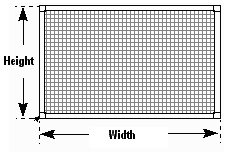 Single Hung Half Window Screens typically only cover the bottom half of the window. In many cases they may have either Leaf Springs, Tension Springs or Ram Horn Clips located on the Top with Lift Tabs on the Bottom.
Single Hung Windows only open from the bottom up and are typically made of aluminum. These type window screens normally install in tracks located at top and bottom on the outside of the window.
Some newer Single Hung Windows may be made from Vinyl and the window screens may install from the inside.
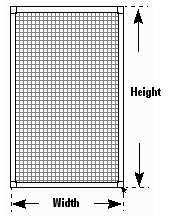 Horizontal "Slider" Half Window Screens typically only cover the left half of the window looking from the outside. In many cases they may have either Tension Springs or Leaf Springs One Side with Lift Tabs on the Opposite Side.
Horizontal "Slider" Windows (not the screens) open by sliding the window sideways and are typically made of aluminum. These windows screens normally install in tracks located on the left and right sides on the outside of the window.
Some newer Single Hung Windows may be made from Vinyl and the window screens may install from the inside.
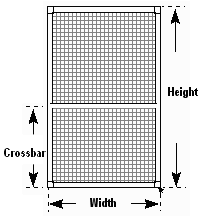 Double Hung Full Window Screens or Wood Window Screens typically cover the entire window. They normally have a Horizontal Crossbar for added strength across where the top and bottom window meet.
Double Hung Windows open from the top and bottom and may be made of aluminum or wood.
Older Wooden Windows may just open from the bottom.
Attachment Hardware may vary greatly across different window manufacturers.
Double Hung windows may have Leaf Springs on Top, Butterfly or Slide Latches on the sides, Spring Plungers on the Top and/or Sides.
There is also some Hardware specifically made for Wood Windows. It is called "Wood Window Hardware" and consists of Wire Loops attached to the bottom of the Screen that hooks over Ball Head Screws in the window sill.
The associated hardware to hold the Top of the window screen is called "Jiffy Hangers with Nails"
Quality Screen Co. Offers These "How To" Guides to Provide Some Guidance and Tips on Various Activities Related to Measuring, Ordering or Installing Window Screens, Solar Screens, Roll-Away Retractable Window & Door Screens, Porch & Patio Screening Systems and Other Do-It-Yourself Screening Projects. Remember That We Cannot See Your Windows or Doors and That You Are Responsible For Determining Your Own Specific Needs. If the How To Guides Do Not Seem to Describe Your Project or You Do Not Understand Our Installation Guide, Feel Free to Contact us.